

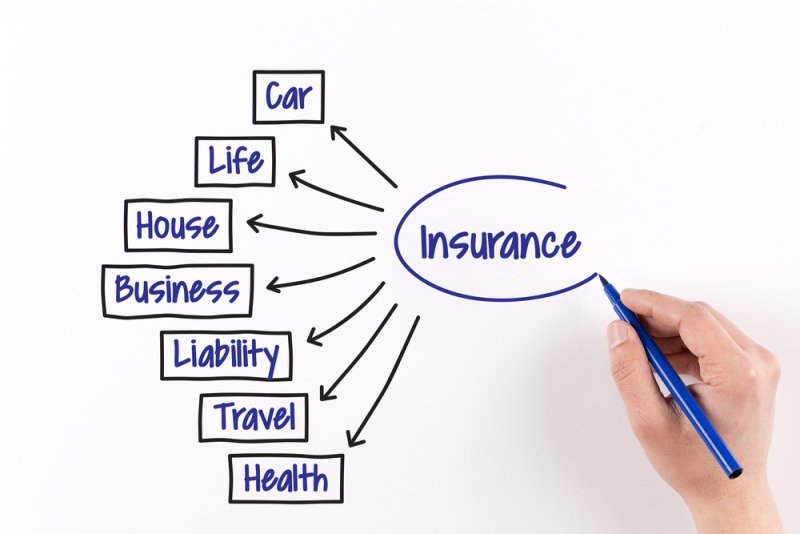
Insurance is the safety net for reducing surprises. No matter what the risk—health, income, car, house, family, or even pets—the correct insurance will make sure one surprise doesn't turn into a crisis. Understanding major types makes it easier to compare policies and identify gaps.
There is no single comprehensive list because different insurance companies cover different risks. But the basic kinds of insurance that you will commonly hear are those related to health, life, cars, property, income protection, and specialized insurances.
What matters is the kind of risk that could cause a major financial loss. You could incur medical bills, accidents could create liabilities or repair bills, and deaths or disabilities could mean no income to sustain your family.
| Type | What it generally covers |
| Health insurance | Medical services, dependent upon the policy's coverage, deductible, copay, limits, and exclusions |
| Automobile insurance | Damages caused to the automobile and liability for bodily injury or property damages |
| Life insurance | A benefit payable in case of death; permanent life policies could accumulate cash value |
| Homeowners insurance | Damage to the property and contents and liability, among other living expense allowances |
| Renters insurance | Contents, personal liability and certain living expense allowances |
| Disability insurance | Contribution towards the loss of income due to a qualifying disability that restricts you from working |
| Long-term care insurance | Coverage for qualifying long-term care such as in-home care, assisted living, or nursing facility care |
| Pet insurance | Covering veterinary costs for illness and accidents among other covered services |
Comparing only premiums can be misleading. Two similarly priced policies may have very different deductibles, limits, exclusions, reimbursement rules, or waiting periods.
Also Read: What Personal Liability Insurance Covers and How it Works?
There is no single checklist that applies to every family; however, some insurance policies that people must take into consideration first include the following.
Health insurance is commonly viewed as a starting point since medical expenses are quite significant. Besides premiums, consider deductibles, out-of-pocket maximums, network of providers, covered services, prescription restrictions, and exceptions. The lower premium may not be best for you because you may not afford the costs that arise after the event.
Auto insurance should be your priority if you have a car and are using it all the time. Liability insurance becomes very useful in situations in which you are responsible for causing an injury or damage to someone else’s property. Collision insurance covers the loss arising from a collision, while comprehensive covers losses other than collision. The minimal required insurance coverage might not be sufficient.
Life insurance becomes necessary in case somebody is relying on your earnings. Term life insurance gives you a guarantee only within a set term of time. Permanent life insurance offers lifelong protection and includes some features of cash value, though it is more complicated and costly. Set up your own coverage amount, taking into account debts, child care, education, and replacement earnings.
Homeowners insurance may be able to protect both the house and its contents from damages covered by the insurance. The coverage might also include liability insurance and help with extra living costs in case of a covered cause making the home uninhabitable. Homeowners need to pay attention to the exclusions section because not all types of damage are covered.
Renters' insurance covers those who rent, not the rented place. A landlord’s insurance usually covers the building; renters insurance helps cover your items and gives you some liability insurance.
The two forms of insurance can be difficult to see since they offer protection against something that can appear irrelevant: disability insurance and long-term care insurance.
Disability insurance does not protect an object but the capacity to earn money. In case an illness or injury prevents you from working for a specified period of time, the insurance may provide some replacement income. It may be particularly helpful when your financial resources will not be sufficient to cover expenses for several months or even years. Compare definitions of disability, benefit period, elimination period, benefit amount, exclusions, and adjustments.
Long-term care insurance assists in different conditions. It can assist with the costs associated with a need for certain services related to basic activities and care provided in the home, assisted-living facility, or nursing home. This is not regular health insurance. Its value depends on your age, assets, family situation, care requirements, and eligibility.
List those risks that you will find hard to cover on your own finances, such as medical expenses, loss of income, property damage, legal liability, caring for dependents, and asset protection.
Compare policies through measures other than price, considering factors like coverage limits, deductible amounts, exclusions, waiting/elimination period, claim process, renewal terms, and benefit triggers. In addition, determine if the coverage is primary or secondary and if you are insured against a particular risk under another insurance policy.
Consider your financial situation as well, since a person with savings might select a different deductible than one without enough money in an emergency fund. Someone with dependents could require higher levels of life and disability insurance than a person whose family does not depend on him/her.
Review your insurance needs whenever you get married, have children, buy a house, change your job, start a business, purchase a vehicle, or acquire new debt.
Insurance coverage options may appear vast, but deciding what is best for your case becomes easy once you start thinking about the financial implications of insurance decisions rather than purchasing everything. You should look at risks that would significantly affect your financial stability and set coverage limits and deductibles accordingly.
In most cases, health, automobile, life, homeowner or renter, and disability insurance require your attention. Other kinds of coverages such as long-term care insurance, pet insurance, travel insurance, and umbrella insurance should be considered depending on particular needs. Above all, you should read the policy prior to purchasing it.
The factors that determine your needs include income, number of dependents, total assets, geographical location, potential health-related risks, ownership of vehicles, type of housing, and savings. Most people start with an analysis of health, automobile, life, homeowners'/renters' and disability insurances, then purchase specialized insurances when a major gap is found.
This is not a definitive figure. There are various kinds of insurance that focus on different kinds of risks, and some types have several policy kinds or even optional kinds of insurance coverage. The main categories of consumer insurance include health, automobile, life, property, disability, long-term care, and pet insurance.
A premium is the cost of keeping the insurance policy effective, usually per month or year. A deductible is what you need to pay for a claim from the insurance before the insurer starts making payments.
Cost is not the sole determinant of value. Plans can vary in their maximum limits of coverage, deductibles, exemptions, reimbursement rates, waiting periods, eligibility criteria, networks, and conditions of payment. The lower-cost plan could mean you end up paying more during an insured incident.
Reassess your insurance coverage whenever your financial obligations shift significantly. Events such as marriage, having children, changing jobs, purchasing property or an automobile, creating a business venture, earning more, or taking out a loan are just some instances where you need to reconsider your insurance plans.
This content was created by AI